
Healthcare websites are no longer just online brochures. Patients use them to find doctors, compare treatments, book appointments, access medical records, and get answers to important health questions. If a website is slow, confusing, or difficult to use, visitors may leave before they ever contact the provider.
In 2026, healthcare providers need websites that combine simple navigation, accessibility, privacy, and modern technology. The latest healthcare web design trends focus on making online healthcare easier, faster, and more welcoming for everyone. Whether you run a hospital, private clinic, or medical practice, investing in professional healthcare website design services can help you build trust, improve patient satisfaction, and attract more appointments.
In this guide, we explore 15 healthcare web design trends for 2026, explain how they affect patient experience, and provide practical recommendations for hospitals, clinics, and medical practices looking to improve their digital presence.
Key Takeaways
- Mobile-First Design: Responsive layouts and intuitive navigation help patients access medical information, explore healthcare services, and book appointments seamlessly across devices.
- AI-Powered Experiences: AI chatbots and virtual assistants improve patient support by answering common questions, simplifying appointment scheduling, and providing quick assistance.
- Accessibility and Security: Accessible interfaces, secure patient portals, and strong data protection measures create inclusive digital experiences and strengthen patient trust.
- Patient-Centered Technology: Telemedicine, personalized dashboards, interactive medical content, and fast-loading pages make healthcare websites more engaging, convenient, and accessible.
Healthcare Website Design Trends Comparison at a Glance
Not every healthcare website needs all 15 website design trends in 2026. The following table compares their primary benefits, ideal use cases, and implementation priorities to help healthcare organizations decide where to invest.
| Design trend | Main patient benefit | Best suited for | Priority |
| Mobile-first design | Easier browsing and booking | All healthcare providers | Essential |
| AI chatbots | Quick answers and support | Hospitals and large clinics | Optional |
| Telemedicine integration | Convenient virtual consultations | Clinics and specialists | High when offered |
| Accessibility-first design | Inclusive website access | All healthcare providers | Essential |
| Minimalist UI | Easier navigation | All healthcare providers | Essential |
| Personalized experiences | More relevant information | Returning patients | Optional |
| Secure patient portals | Protected access to patient services | Hospitals and clinics | High when offered |
| Fast-loading websites | Better browsing experience | All healthcare providers | Essential |
| Voice search | Alternative information discovery | Providers with relevant user needs | Optional |
| Wearable integration | Connected health monitoring | Digital health providers | Specialized |
| Interactive medical content | Better patient education | Clinics and specialists | High value |
| Local SEO and GEO | Improved information discoverability | Local medical practices | High |
| Human-centered visuals | More welcoming experience | Hospitals and clinics | High value |
| Data visualization | Easier understanding of health information | Patient portals | Specialized |
| Micro-interactions | Clearer website interactions | All healthcare providers | Supporting feature |
The best implementation strategy depends on the organization’s size, patient population, existing technology, and available resources. Foundational requirements such as accessibility, security, mobile usability, and website performance should generally come before advanced integrations.
Want to Create a Better Healthcare Website?
A well-designed healthcare website makes it easier for patients to find information, explore services, and book appointments. Explore our healthcare website design services to build a user-friendly website that supports your patients and business goals.
Let’s Build Your Healthcare WebsiteWhy Healthcare Web Design Trends Matter in 2026
Patients often visit a healthcare website when they need help, have questions, or want to book an appointment. They should not have to search through confusing menus or struggle with complicated forms to find basic information.
Modern website design also plays an important role in building trust. A clean layout, accurate medical information, clear contact details, and secure patient services make visitors feel more comfortable interacting with a healthcare provider.
According to the 2026 design direction, mobile-first experiences, accessibility, AI-powered personalization, telemedicine, and stronger data security are among the major changes shaping healthcare websites.
Here is why these changes matter:
- Better patient experience: Visitors can find doctors, services, and appointment options without wasting time.
- More trust: Professional design and visible security information help patients feel safe sharing information.
- Improved accessibility: People with disabilities and older patients can use the website more easily.
- More appointment bookings: Clear buttons and simple booking forms make it easier to take action.
- Stronger online visibility: Fast, mobile-friendly, and well-organized websites support better search performance.
A healthcare website should do more than look attractive. It should help patients complete important tasks with as little effort as possible.
15 Best Healthcare Web Design Trends in 2026
The top healthcare web design trends in 2026 focus on convenience, patient engagement, and trust. Some improve the website’s appearance, while others make important healthcare services easier to access.
Let’s explore the 15 trends and how healthcare providers can use them.
1. Mobile-First Website Design
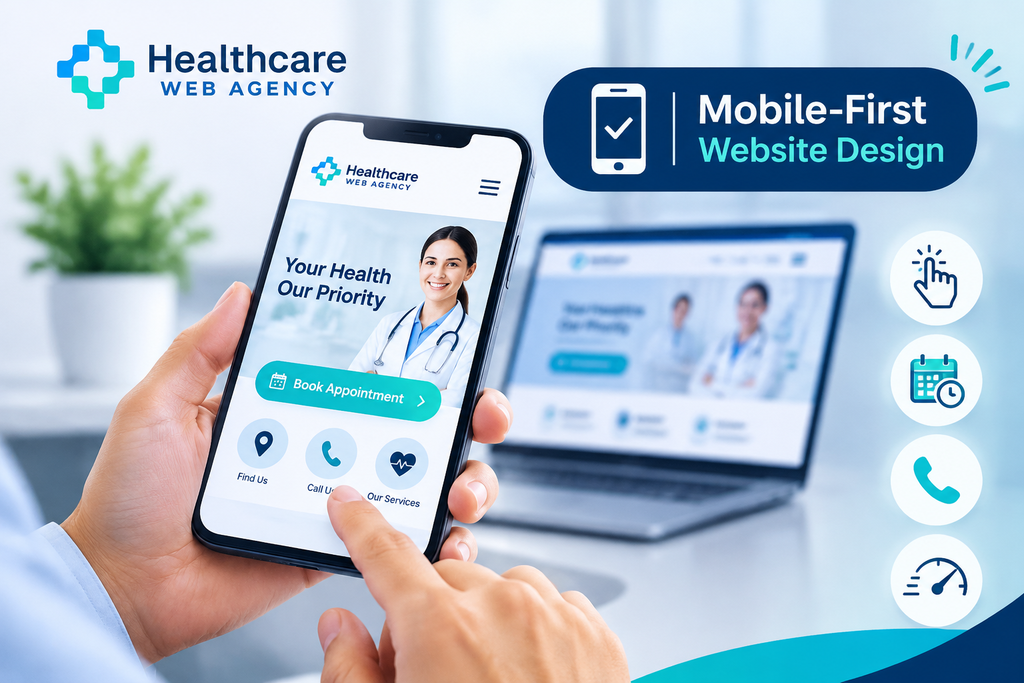
Most patients use smartphones to search for doctors, check clinic locations, and book appointments. A healthcare website must work smoothly on smaller screens instead of simply shrinking its desktop layout.
Mobile-first design means building the website for smartphones first and then adjusting it for tablets and computers.
Important features include:
- Large buttons that are easy to tap.
- Simple menus with clear service categories.
- Short appointment forms.
- Click-to-call phone numbers.
- Fast-loading pages and properly sized images.
For example, a patient searching for a nearby dentist should be able to find the clinic’s address and booking button without zooming in or scrolling through several pages.
Why it matters: A mobile-friendly website saves time, reduces frustration, and helps patients connect with healthcare providers wherever they are.
2. AI-Powered Chatbots and Virtual Assistants
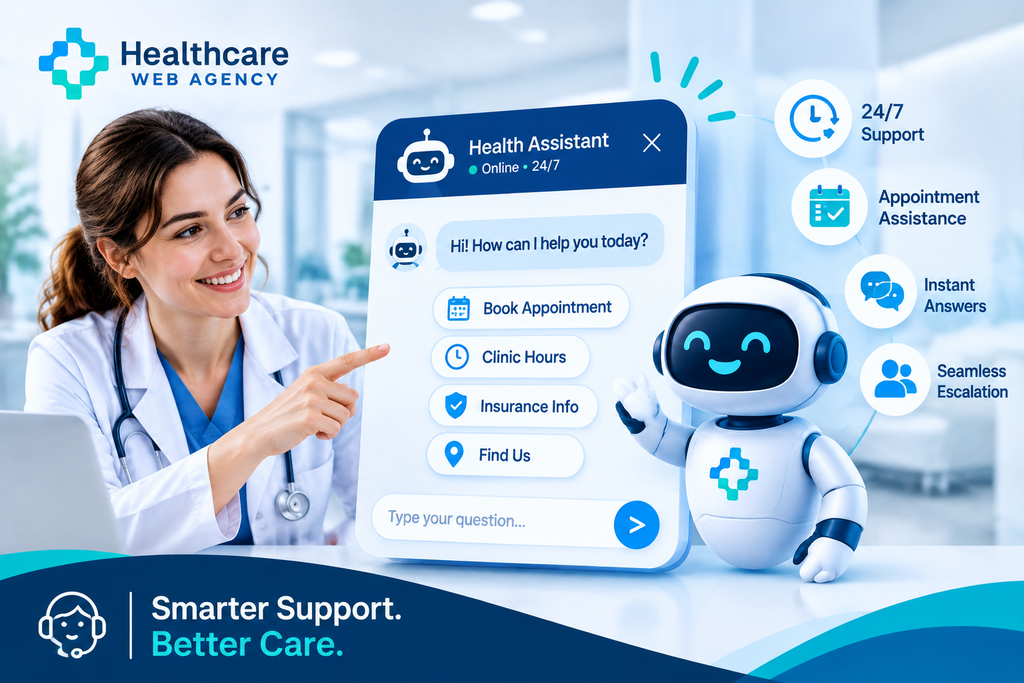
AI chatbots are becoming a useful part of modern healthcare websites. They help visitors find basic information without waiting for a phone call or email response.
A well-designed chatbot can answer common questions about clinic hours, available services, insurance, appointment availability, and preparation instructions.
Popular chatbot features include:
- 24/7 responses to common questions.
- Appointment booking assistance.
- Directions and contact information.
- Answers to frequently asked questions.
- Smooth transfer to a human representative when needed.
For instance, a patient visiting a clinic website late at night can use a chatbot to learn whether the clinic offers weekend appointments.
However, chatbots should not replace doctors or provide unverified medical diagnoses. They should clearly explain their limitations and direct patients to qualified professionals when necessary.
Why it matters: AI support makes healthcare websites more responsive and reduces the workload on reception teams.
3. Telemedicine and Virtual Appointment Integration
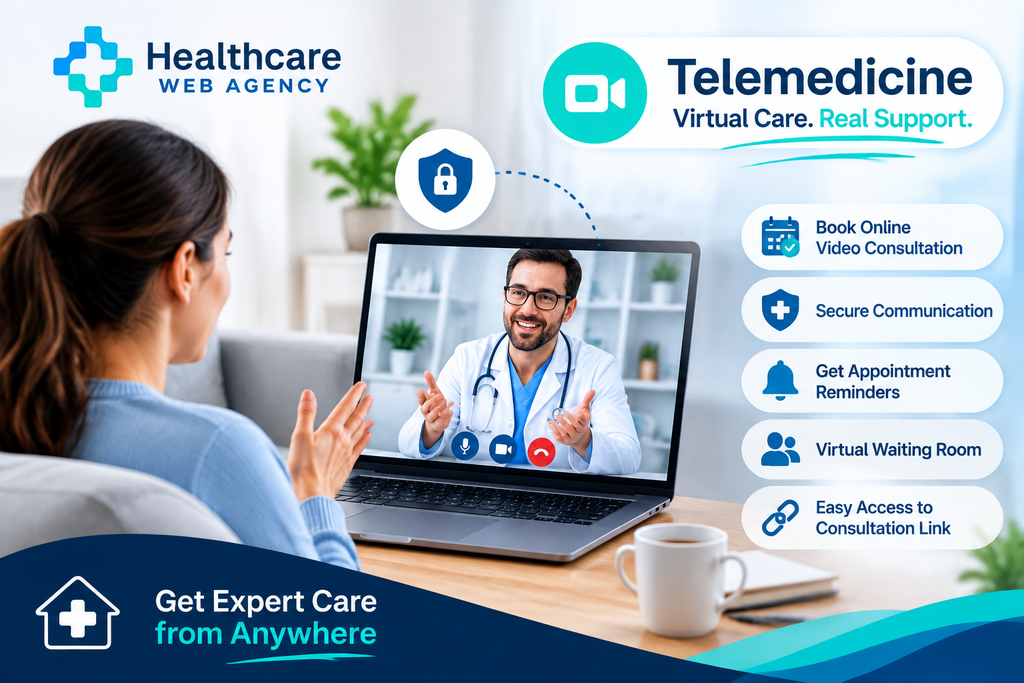
Virtual healthcare has changed how patients connect with medical professionals. Instead of visiting a clinic for every consultation, patients can now speak with doctors through secure video appointments.
Healthcare websites are increasingly connecting appointment systems with telemedicine platforms to make this process easier.
Key features include:
- Online video consultation booking.
- Secure patient-doctor communication.
- Digital appointment reminders.
- Virtual waiting rooms.
- Easy access to consultation links.
For example, someone living far from a specialist can book an online consultation and attend the appointment from home.
The website should explain how virtual visits work, what patients need before joining, and how their personal information is protected.
Why it matters: Telemedicine improves convenience, expands access to healthcare, and reduces unnecessary travel.
4. Accessibility-First Website Design
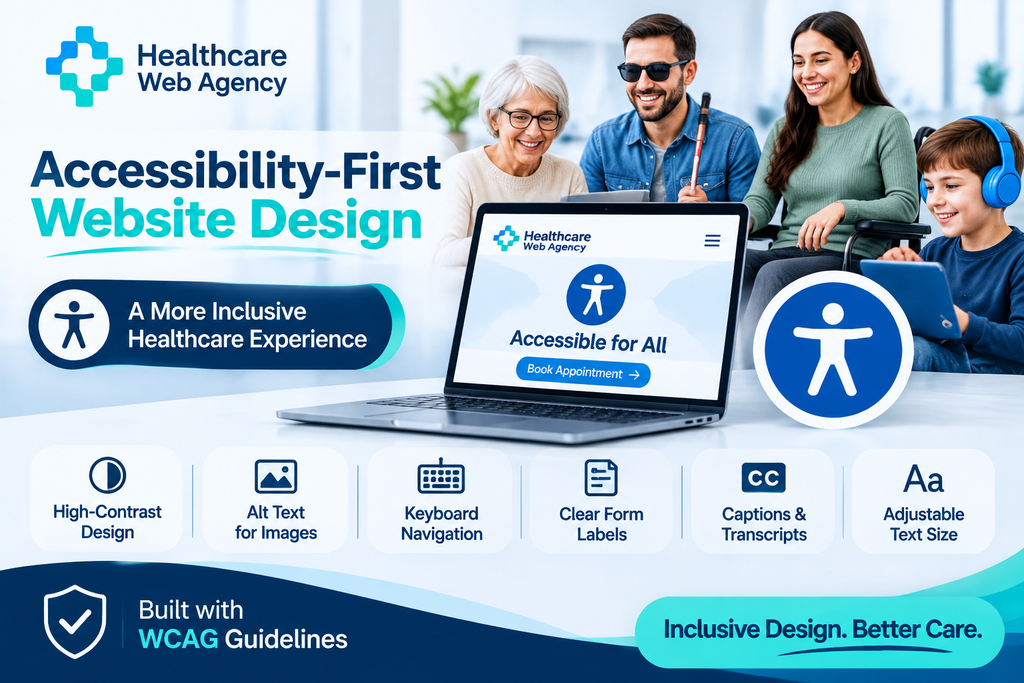
A healthcare website should be easy to use for everyone, including people with visual, hearing, physical, or cognitive disabilities.
Accessibility-first design makes sure visitors can understand content, navigate pages, and complete important tasks without unnecessary barriers.
Essential accessibility features include:
- High-contrast text and backgrounds.
- Descriptive alternative text for images.
- Keyboard-friendly navigation.
- Clear labels for website forms.
- Captions and transcripts for videos.
- Readable fonts and adjustable text sizes.
For example, someone who cannot use a mouse should still be able to navigate the website and book an appointment using a keyboard.
Healthcare organizations should use the Web Content Accessibility Guidelines (WCAG) as a practical design and testing reference. Applicable legal requirements also depend on the organization and its location.
Why it matters: Accessible websites create a more inclusive experience and help more patients access essential health information.
5. Clean and Minimalist User Interfaces
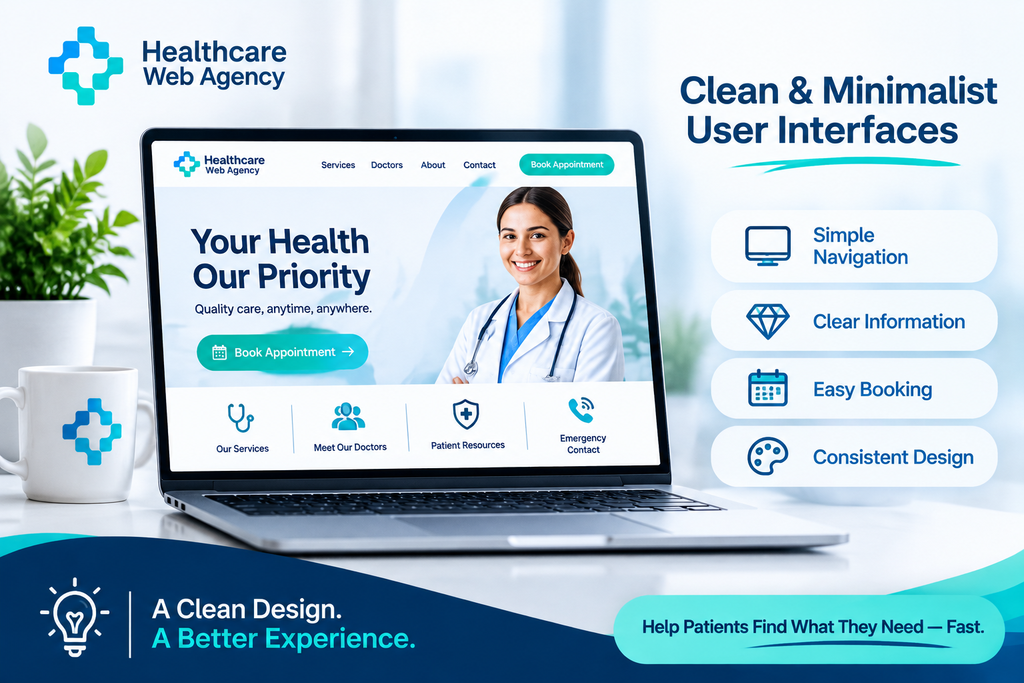
Healthcare websites often contain a lot of information, including medical services, doctor profiles, treatment details, and patient resources. Putting everything on one page can overwhelm visitors.
Minimalist design solves this problem by removing unnecessary elements and highlighting the information patients need most.
Common design elements include:
- Plenty of white space.
- Simple navigation menus.
- Clear headings and short paragraphs.
- Consistent colors and fonts.
- Easy-to-find appointment buttons.
For example, a hospital homepage can display its main services, emergency contact details, and appointment options without filling the screen with unnecessary text.
Why it matters: A clean interface reduces confusion and helps patients find important information faster.
6. Personalized Patient Experiences
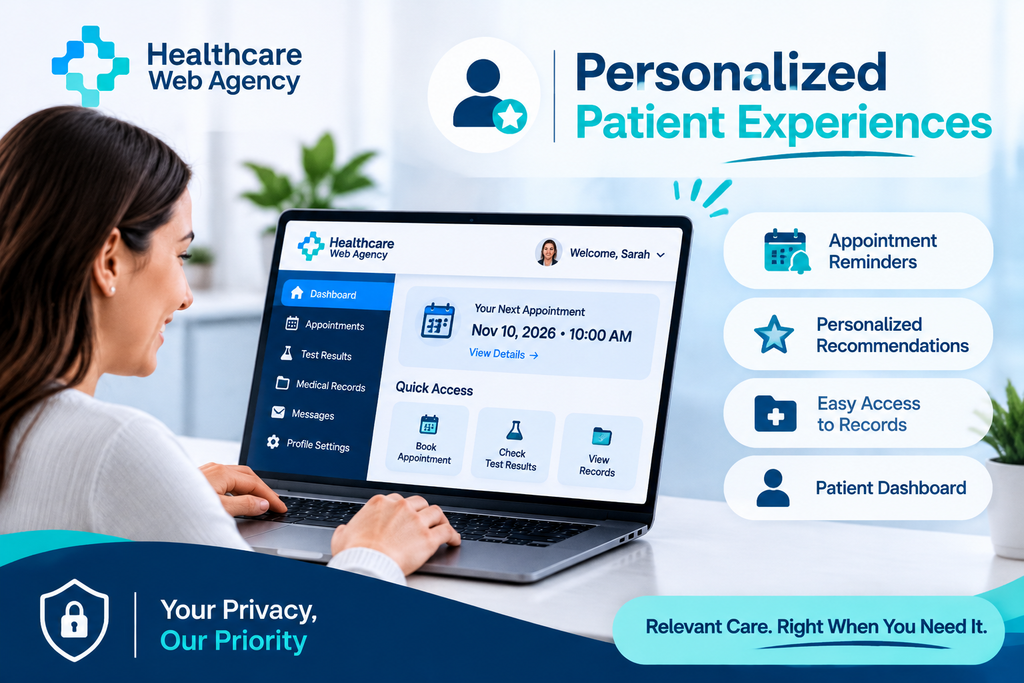
Not every patient visits a healthcare website for the same reason. Some want to book their first appointment, while others need to check test results or manage an existing treatment plan.
Personalized website experiences help visitors find relevant information based on their needs and preferences.
Useful personalization features include:
- Patient dashboards.
- Relevant appointment reminders.
- Personalized service recommendations.
- Saved appointment details.
- Easy access to previous records.
For example, returning patients may see their upcoming appointments and patient portal links immediately after signing in.
However, healthcare websites must handle personal information carefully. Personalization should follow applicable privacy rules, use appropriate consent, and avoid exposing sensitive details.
Why it matters: Relevant information makes website interactions more convenient and encourages patients to stay connected with their healthcare providers.
7. Secure Patient Portals and Strong Privacy Features
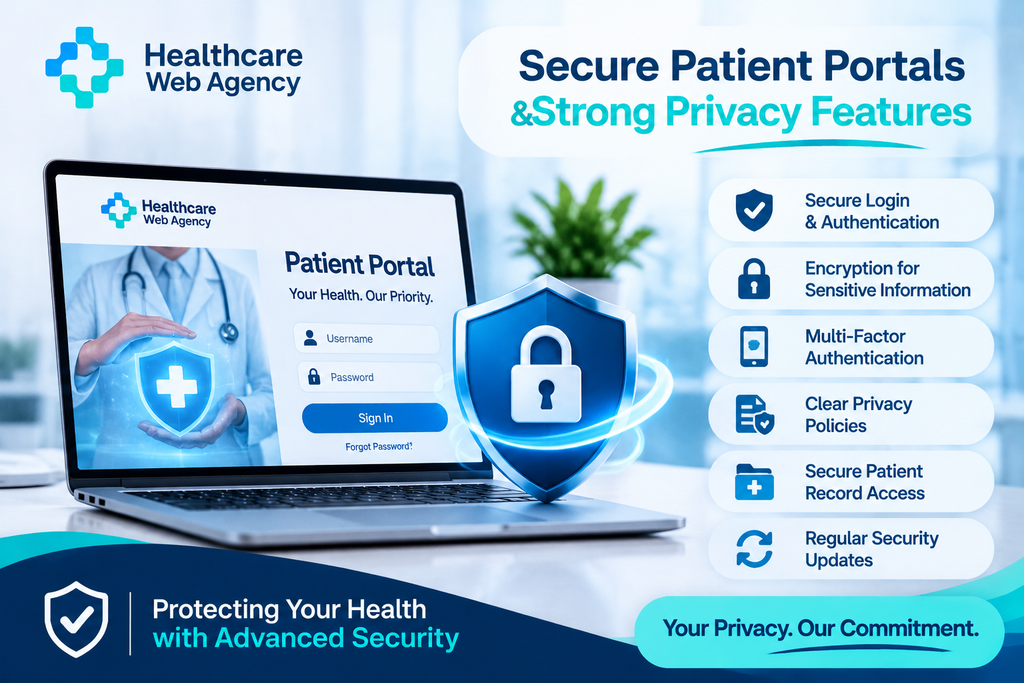
Patients often share sensitive information through healthcare websites. They may enter their contact details, medical history, insurance information, or payment details.
That makes website security a major part of modern medical design.
Important security features include:
- Secure login and authentication.
- Encryption for sensitive information.
- Multi-factor authentication where appropriate.
- Clear privacy policies.
- Secure patient record access.
- Regular security updates.
For example, a patient portal should allow users to view their medical records through a protected account rather than exposing private information through ordinary website pages.
Healthcare organizations should also make sure that connected booking, messaging, and payment systems follow the privacy and security requirements that apply to them.
Why it matters: Strong security protects patient information and builds confidence in digital healthcare services.
8. Fast-Loading Websites and Core Web Vitals
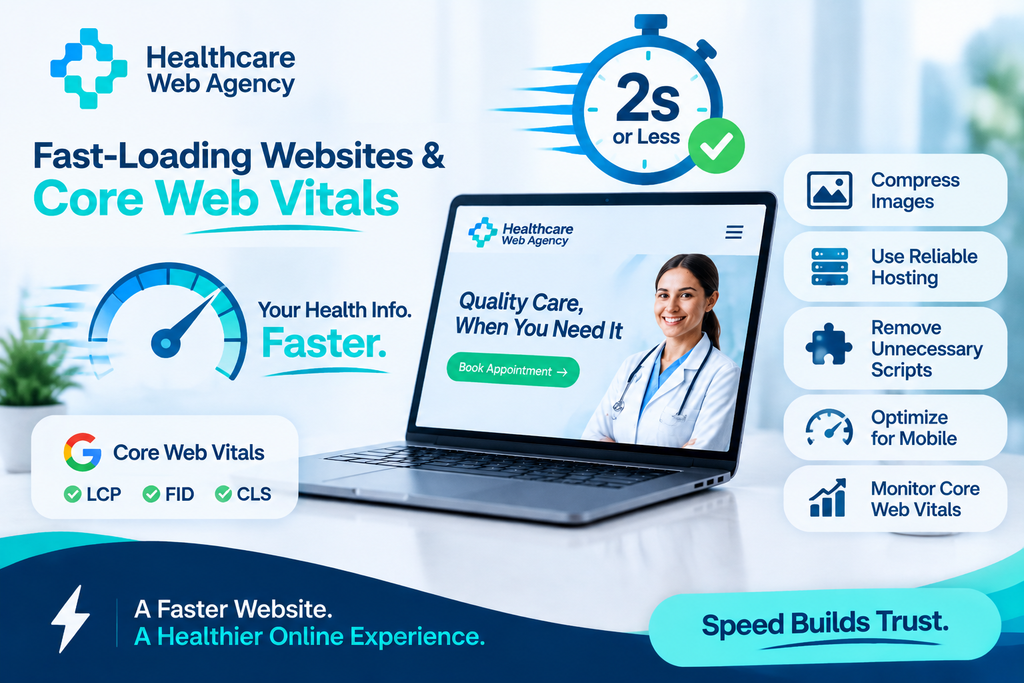
Website speed is important when patients need information quickly. A slow website can frustrate visitors, especially those trying to find emergency contact details or book an appointment.
In 2026, healthcare providers are paying more attention to page speed and website performance.
Ways to improve website speed include:
- Compressing images without reducing their quality.
- Using reliable website hosting.
- Removing unnecessary scripts and plugins.
- Reducing large files and animations.
- Improving mobile page performance.
- Monitoring Google’s Core Web Vitals.
For example, a patient looking for a nearby emergency clinic should not have to wait several seconds for the homepage to load.
Why it matters: Faster websites improve usability, reduce visitor frustration, and support better search engine performance.
Want a Faster, More Effective Healthcare Website?
Improve your website’s speed and performance with professional healthcare web design that makes it easier for patients to find information and book appointments.
Let’s Improve Your Website9. Voice Search and Conversational Navigation
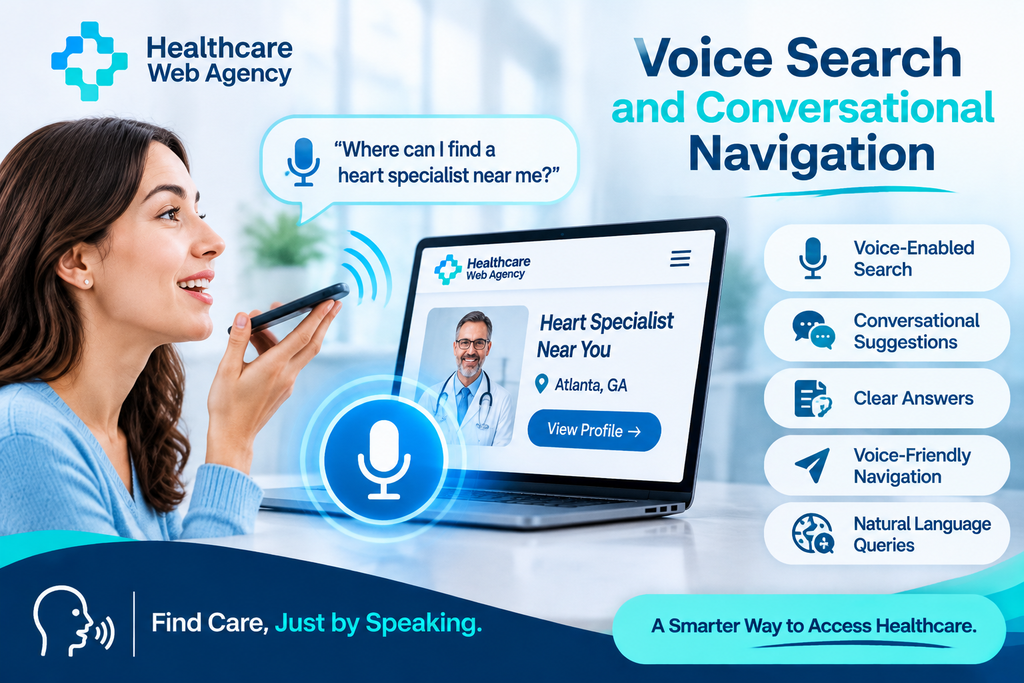
Voice search allows patients to find information by speaking instead of typing. It is particularly helpful for people who have difficulty using a keyboard or prefer hands-free searching.
Healthcare websites are beginning to support more natural, question-based searches.
Useful voice search features include:
- Voice-enabled website search.
- Conversational search suggestions.
- Clear answers to common health questions.
- Voice-friendly navigation.
- Support for natural language queries.
For example, a visitor might ask, “Where can I find a heart specialist near me?” A well-organized website should make relevant doctor profiles and location information easy to discover.
Healthcare providers should also create content around the questions patients commonly ask.
Why it matters: Voice search makes information easier to access and helps patients find relevant services more naturally.
10. Integration With Wearable Devices and Health Apps
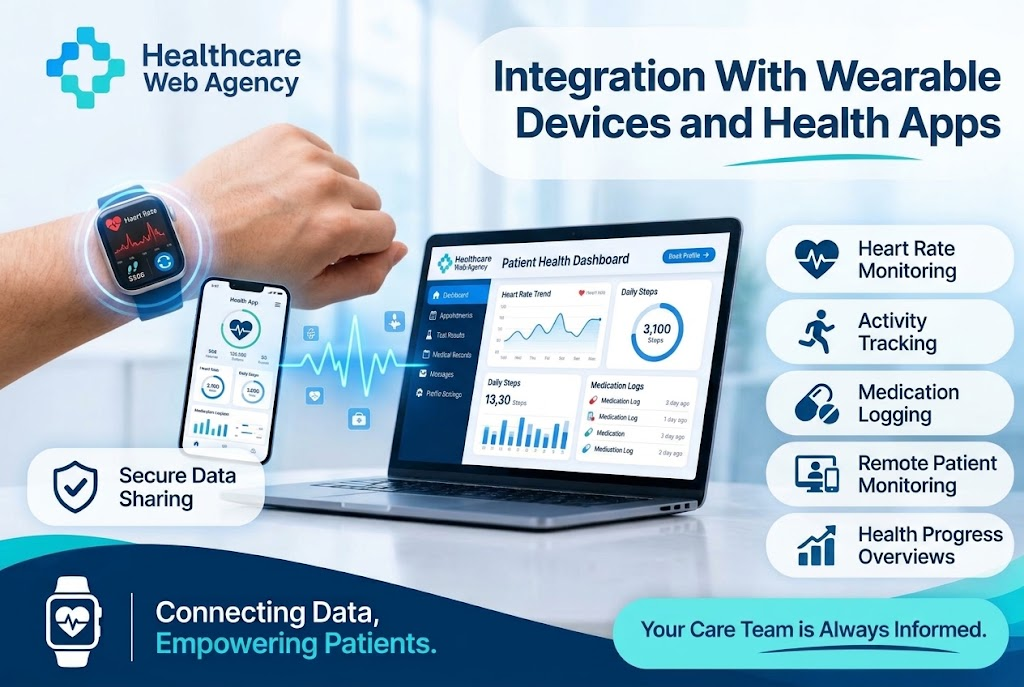
Wearable devices, such as smartwatches and fitness trackers, allow people to monitor their daily health activities. Healthcare websites are increasingly connecting with digital health platforms to support more connected patient experiences.
These integrations can help patients share relevant health information with their care teams when appropriate.
Common integration options include:
- Fitness tracker data synchronization.
- Heart rate and activity monitoring.
- Health progress dashboards.
- Medication tracking applications.
- Remote patient monitoring tools.
For example, a patient participating in a remote monitoring program may use a connected device to share selected health readings with their healthcare provider.
However, these features need clear permission settings and secure data handling. Patients should understand what information is collected and who can access it.
Why it matters: Connected health tools support ongoing communication and help patients take a more active role in managing their health.
11. Interactive Medical Content and Educational Resources
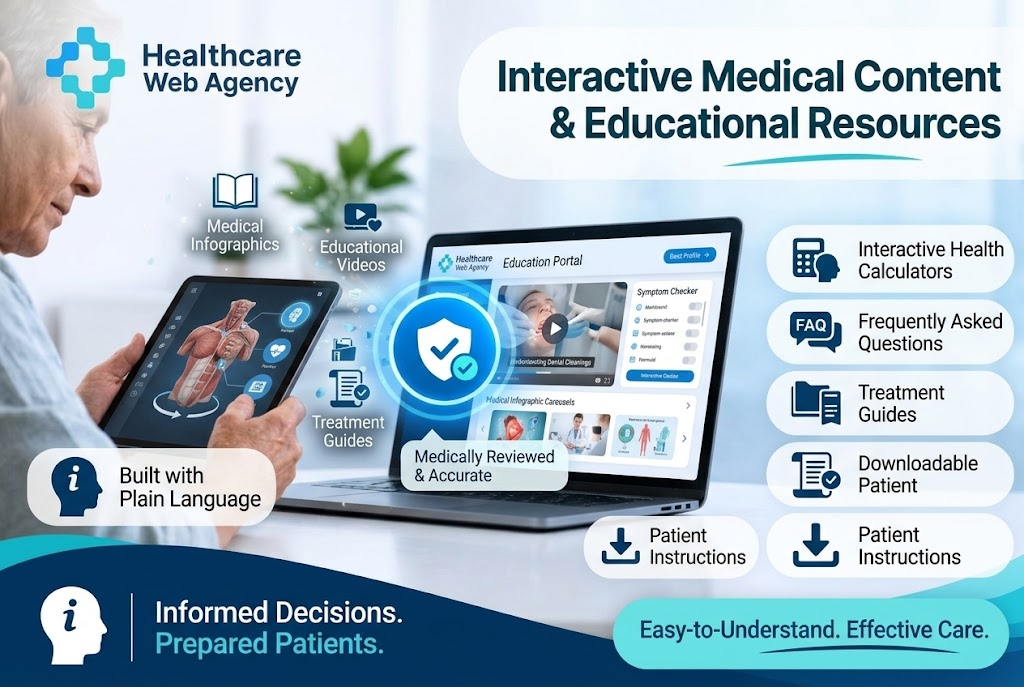
Patients often visit healthcare websites to understand symptoms, treatments, procedures, and preventive care. Long blocks of medical text can make this information difficult to understand.
Interactive educational content presents medical information in simpler and more engaging ways.
Popular content formats include:
- Medical infographics.
- Educational videos.
- Interactive health calculators.
- Frequently asked questions.
- Treatment guides.
- Downloadable patient instructions.
For example, a dental clinic could use a short video to explain what happens during a routine dental cleaning.
Healthcare providers should make sure educational content is medically reviewed, accurate, and written in plain language. Interactive tools should also avoid presenting themselves as substitutes for professional medical advice.
Why it matters: Easy-to-understand resources help patients make informed decisions and feel more prepared before appointments.
12. Local SEO and Generative Engine Optimization (GEO)
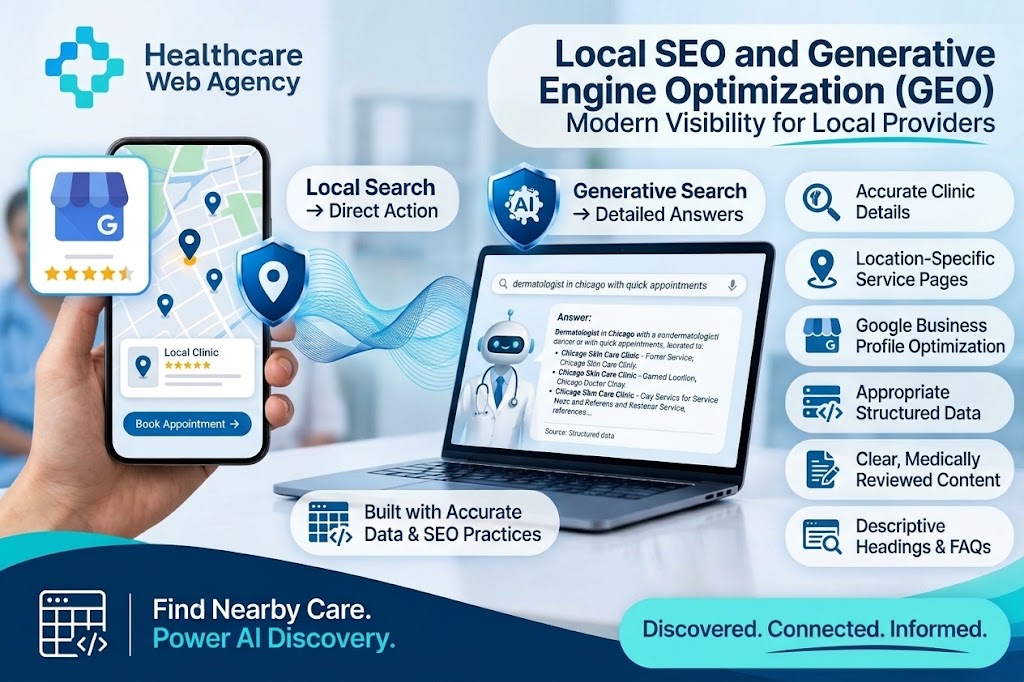
Patients frequently search online for healthcare services in their area. They may look for nearby hospitals, dentists, specialists, or clinics that offer specific treatments.
In 2026, healthcare websites need to support both traditional search engines and AI-powered search experiences.
Local SEO helps healthcare providers appear in location-based searches, while Generative Engine Optimization (GEO) focuses on making website information easier for AI-powered search tools to understand and reference.
Important optimization practices include:
- Adding accurate clinic names, addresses, and phone numbers.
- Creating location-specific service pages.
- Optimizing Google Business Profiles.
- Using relevant medical service keywords.
- Adding appropriate structured data.
- Publishing clear, medically reviewed content.
- Organizing information with descriptive headings and FAQs.
For example, a patient searching for a dermatologist in Chicago should be able to find relevant services, doctor information, clinic locations, and appointment details.
These practices are becoming important parts of modern healthcare web design trends because a website must be discoverable as well as easy to use.
Why it matters: Strong local visibility helps patients find nearby providers, while clear content makes healthcare information easier for search engines and AI systems to interpret.
13. Human-Centered Photography and Calming Visual Design
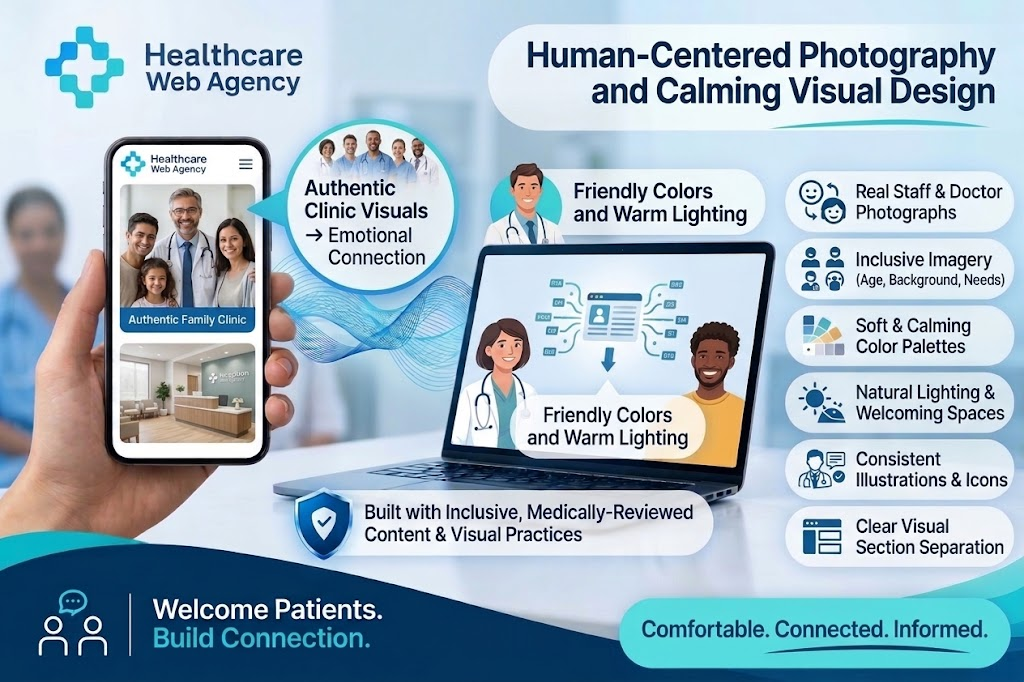
Healthcare websites should make visitors feel comfortable and welcome. Generic stock photos and overly clinical layouts can sometimes make a website feel distant or impersonal.
Modern medical websites are increasingly using authentic photography, friendly colors, and visuals that reflect real patient experiences.
Popular visual design choices include:
- Real photographs of doctors and medical staff.
- Images of actual healthcare facilities.
- Soft and calming color palettes.
- Natural lighting and welcoming environments.
- Consistent illustrations and icons.
- Clear visual separation between sections.
For example, a family clinic can use genuine photographs of its doctors and reception area to help new patients feel familiar with the location before visiting.
Healthcare providers should also use images that represent different ages, backgrounds, and patient needs.
Why it matters: Human-centered visuals create a welcoming atmosphere and help build an emotional connection with visitors.
14. Interactive Data Visualization and Patient Dashboards
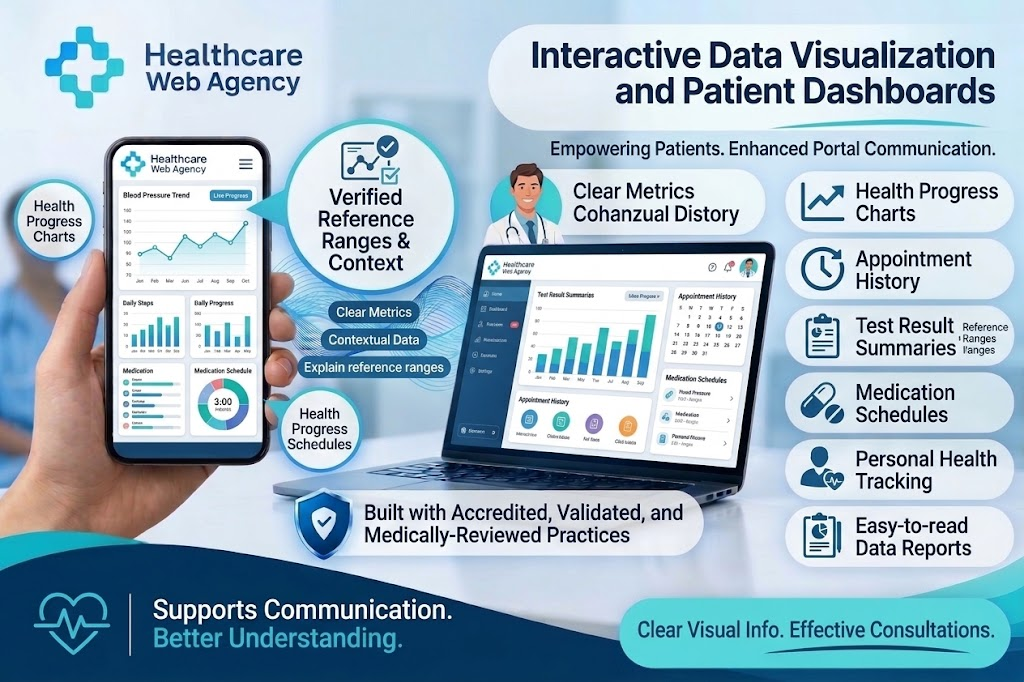
Medical information can sometimes be difficult to understand, especially when it includes numbers, test results, or long reports.
Interactive data visualization presents this information through simple charts, graphs, and dashboards.
Useful features include:
- Health progress charts.
- Appointment history.
- Test result summaries.
- Medication schedules.
- Personal health tracking.
- Easy-to-read data reports.
For example, a patient managing a long-term health condition may use a dashboard to view selected measurements over time and discuss changes with their doctor.
These tools should clearly explain units, dates, and reference ranges. They should never encourage patients to make medical decisions based on charts without professional guidance.
Why it matters: Clear visual information makes patient portals easier to understand and supports better communication between patients and healthcare professionals.
15. Micro-interactions and Helpful Website Animations
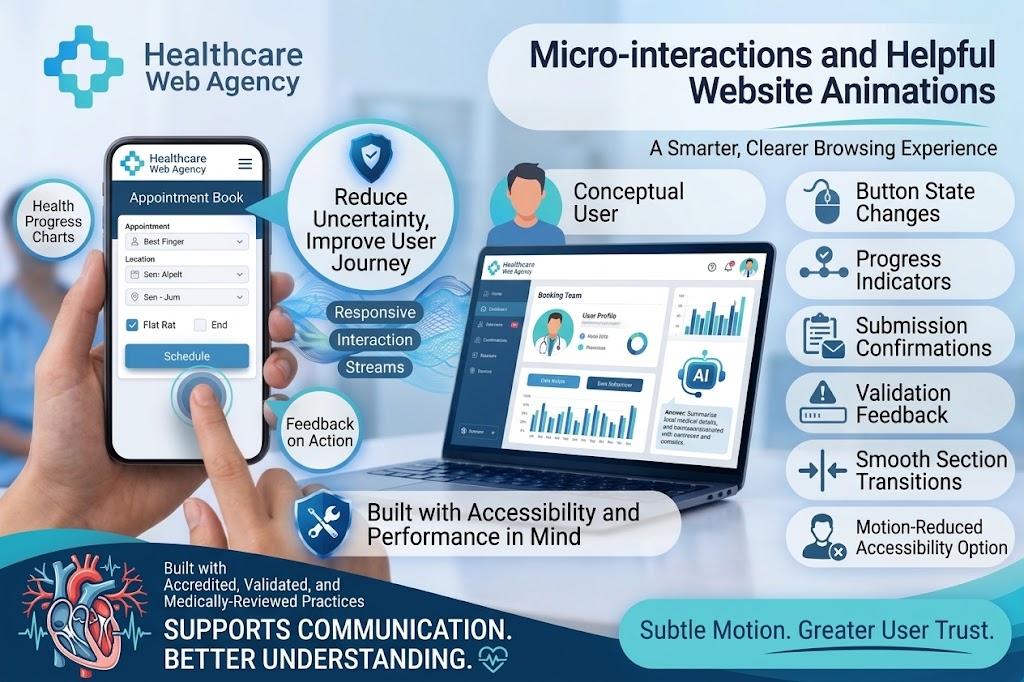
Small design details can make a healthcare website feel more responsive. Micro-interactions are simple visual or interactive responses that appear when visitors perform an action.
They provide feedback and help users understand what is happening on the website.
Common examples include:
- A button changing appearance when clicked.
- A progress indicator during appointment booking.
- A confirmation message after submitting a form.
- Helpful reminders when required fields are missing.
- Smooth transitions between website sections.
For example, when a patient submits an appointment request, a clear confirmation message can let them know that the form was received.
Animations should remain subtle and should never slow down the website or make navigation difficult. Visitors who prefer reduced motion should also have an accessible experience.
Why it matters: Helpful micro-interactions make website actions clearer, reduce uncertainty, and improve the overall browsing experience.
Turn These Healthcare Web Design Trends Into Reality
Choosing the right design features is only the first step. You also need a strategy that fits your patients’ needs, website goals, and budget. Work with an experienced healthcare web design team to create a secure, accessible, and engaging online experience.
Bring Your Website Vision to Life]How to Choose the Right Healthcare Web Design Trends for Your Website
Following every new design trend is not always the best approach. A small dental clinic may need a simple appointment booking system, while a large hospital may require patient portals, telemedicine, and advanced security features.
The right approach is to choose trends based on your patients’ needs, available resources, and business goals.
Here are some practical steps to consider:
- Understand your patients: Identify what visitors want to do, such as finding a doctor, checking clinic hours, or booking an appointment.
- Review your existing website: Look for slow pages, confusing menus, outdated information, and difficult forms.
- Prioritize essential features: Start with mobile responsiveness, accessibility, website speed, and secure patient communication.
- Choose useful technology: Add AI chatbots, telemedicine, or patient dashboards when they solve real problems.
- Test the experience: Ask patients and staff to try important website features and share their feedback.
- Measure performance: Track appointment requests, page speed, mobile usability, and visitor engagement.
These steps help healthcare organizations adopt modern medical web design trends without spending money on features that patients may never use.
What Should You Consider Before Redesigning a Healthcare Website?
A successful redesign requires more than selecting colors, fonts, and images. Healthcare providers should also consider the technical requirements and long-term costs.
For example, the medical website design cost can vary depending on website size, custom functionality, security requirements, integrations, and ongoing maintenance.
If you are comparing the Top Healthcare Web Design Companies, review their healthcare industry experience, previous projects, technical expertise, and understanding of accessibility requirements.
You should also consider how website design connects with your marketing strategy. The best healthcare marketing agencies can help align website content, local SEO, and patient acquisition campaigns with your business goals.
A reliable development partner should understand both design and healthcare-specific requirements. Look for a team that can build a website around patient needs rather than simply following popular visual styles.
Common Healthcare Website Design Mistakes to Avoid
Even attractive websites can create a poor patient experience when they overlook important usability requirements. While exploring medical web design trends, healthcare providers should avoid these common mistakes:
- Overloading pages with information: Too much text makes it difficult for patients to find important details.
- Ignoring mobile users: A website that works only on desktop devices can frustrate visitors.
- Using complicated medical language: Patients need simple explanations instead of unfamiliar medical terms.
- Neglecting accessibility: Small text, poor contrast, and unlabeled forms can prevent people from using the website.
- Adding unnecessary animations: Too many moving elements can distract visitors and slow down pages.
- Overlooking website security: Patient information must be protected through appropriate technical and organizational safeguards.
- Making appointments difficult: Long forms and unclear booking instructions can discourage patients from completing requests.
The best approach is to focus on usability, security, and accessibility before adding decorative features. Even simple modern healthcare web design trends can make a significant difference when they solve real patient problems.
Conclusion
Healthcare website design is moving toward simpler, faster, and more patient-friendly digital experiences. From mobile-first layouts and AI chatbots to telemedicine and secure patient portals, the top medical web design trends in 2026 focus on helping patients access healthcare services with less effort.
However, healthcare providers do not need to adopt all 15 trends immediately. Start with the features that solve your patients’ biggest problems, then improve your website as their needs change.
Whether you are planning a new hospital website design or upgrading an existing medical platform, working with an experienced Healthcare Web Agency can help you create a secure, accessible, and user-friendly website.
Ultimately, the best website is not the one with the most features. It is the one that helps patients find the right information, connect with the right professionals, and feel confident about their healthcare decisions.
Ready to Improve Your Healthcare Website?
Your website should make healthcare services easier to access while building patient trust. Whether you need a complete redesign or want to introduce modern features, the right healthcare web design strategy can make a difference.
Discuss Your Healthcare WebsiteFrequently Asked Questions
The current trends include mobile-first design, AI-powered chatbots, telemedicine integration, accessibility-first layouts, personalized patient experiences, and secure patient portals. Healthcare providers are also using interactive content, wearable device integration, and faster websites to improve patient engagement.
The three major trends are AI-powered healthcare services, telemedicine, and personalized patient experiences. These technologies make healthcare more accessible, reduce administrative work, and help patients receive more convenient services.
Popular medical website design trends include responsive layouts, minimalist interfaces, online appointment booking, virtual consultations, AI chatbots, and accessible navigation. Many providers are also adding patient dashboards and interactive health resources.
The key trends include mobile-first experiences, AI integration, WCAG-focused accessibility, strong website security, voice search, personalized content, and local SEO. Together, these improvements make healthcare websites easier to navigate and more useful for patients.
AI-powered personalization and connected healthcare experiences are among the biggest developments to watch. Websites are increasingly connecting chatbots, patient portals, virtual consultations, and health monitoring tools to create smoother patient journeys.
One important development is the use of AI-powered virtual assistants that help patients find services, answer routine questions, and schedule appointments. Healthcare providers are also focusing on accessible design and stronger privacy features.
Mobile-first, patient-centered design is one of the most important trends in 2026. Patients expect to find doctors, understand services, and book appointments easily from their smartphones. A website that makes these tasks simple can improve the overall patient experience.
Minimalist layouts, authentic photography, simple navigation, and educational content are gaining renewed attention. These design approaches are not entirely new, but healthcare providers are bringing them back with modern technology and improved accessibility.